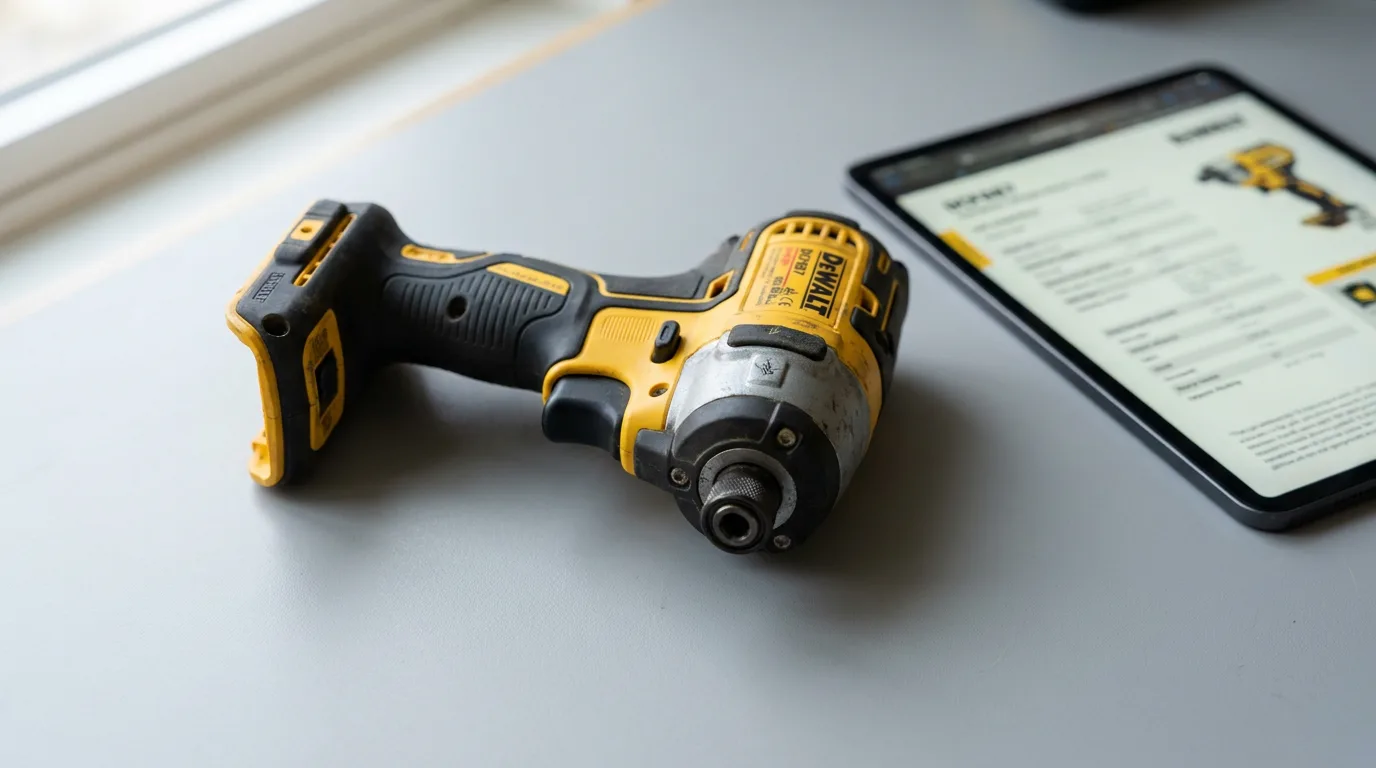

The expensive mistake is using AI where the editor is still doing the hard part
The common failure is buying the tool that produces ten drafts, then discovering the editor still has to check every claim after the copy is already shaped. That is the most expensive point to find the error. The headline is written, the section order is fixed, the internal links are placed, and now someone has to prove whether a specification, comparison, or recommendation belongs in the article at all.
Draft volume looks cheap on the invoice. Ahrefs Starter costs $29 per month. Ahrefs offers a $29 per month Starter tier. Those numbers are easy to compare, so procurement compares them. Bad metric.
Use a simple edit-desk calculation. If a technical blog publishes 12 articles a month, each with eight factual claims that need checking, and an editor spends five minutes per claim, the team has bought itself eight hours of verification work before rewriting starts:
| Monthly articles | Claims per article | Minutes per check | Manual checking time |
|---|---|---|---|
| 12 | 8 | 5 | 480 minutes, or 8 hours |
That is before the editor fixes the prose around the corrected facts. A wrong measurement does not stay local. It changes the recommendation, the comparison, sometimes the whole article.
ClickUp Brain is closer to the buying test that matters because it pulls context from tasks, docs, and comments to generate technical specifications, API documentation, and deployment guides from the materials teams already use. That still is not proof. A content brief built from ranking pages can repeat the same soft claim everyone else copied. For technical blogs, the missing feature is a source trail attached to each factual sentence before draft approval: manufacturer page, standards document, product manual, dated spec sheet, or a deliberate “no authoritative source found.”
Notion AI generates technical specification drafts and PRDs from workspace context. Fine. The category is crowded. The question is narrower: which tool stops an unsourced technical claim from entering the draft? If it cannot do that, it is not reducing editorial work. It is moving the bill to later.
A technical article needs two specs before it needs prose
Decision rule: do not open an AI writer until the article has a functional spec and a technical spec at claim level. A topic brief is not enough. It tells the writer what to cover, not what each factual sentence is allowed to assert.
The distinction matters because “spec” is not one thing.
| Spec type | In software language | In a technical blog workflow |
|---|---|---|
| Requirement specification | What the product must do, including features, functions, and constraints, without naming the implementation | The article must answer a defined reader problem, stay inside approved source types, and avoid claims the team cannot verify |
| Functional specification | How the system should behave from the user’s view | The article must compare, explain, warn, calculate, or recommend in a stated way |
| Technical specification | The implementation detail: architecture, data structures, standards, testing, delivery, support | Each claim gets a source tier, extracted value, unit, approval state, conflict rule, and test before publication |
For publishing teams, the first useful split is between the functional article spec and the technical claim spec. Write the functional spec first: “The article must help a facilities manager choose the correct fastener class for a stated load case,” or “The article must explain why two torque values cannot be compared without thread condition.” That is still not prose. It is the job the prose must perform.
Then write the technical spec for the article’s claims. That file should say which source class wins, which units are acceptable, which fields must be present, and what happens when the source trail breaks. If the value is not in an approved source, the sentence does not graduate into copy.
A fair objection: this sounds too slow for content marketing. It is slower than generating ten drafts from a keyword list. It is faster than discovering, during legal or engineering review, that the article compared two products using a retailer’s copied spec instead of the manufacturer’s sheet.
AI content tools for technical blogs should be bought for this layer. Not tone. Not volume. The tool worth paying for is the one that can keep the requirement, the reader-facing function, and the claim-level technical spec tied together until the page goes live.
What pre-publish verification actually looks like in a technical blog workflow
Start before drafting. Intake is a locked source packet, not a prompt: manufacturer pages, internal product notes, engineering comments, approved positioning, and the target CMS destination. Notion AI can work from workspace wikis, project databases, and meeting notes; ClickUp Brain can pull from tasks, docs, and comments; ChatPRD can sync with Linear, Notion, and Slack. Use that connective tissue to build the record, not to improvise the article.
| Step | AI job | Human gate |
|---|---|---|
| 1. Source intake | Collect approved documents into a project folder or knowledge base | Delete unsupported or duplicate sources |
| 2. Spec extraction | Populate fields: product, model, value, unit, source owner, page URL, last checked date | Confirm the source class is allowed for that field |
| 3. Claim drafting | Attach each technical sentence to one spec field or one approved note | Reject any sentence with no trace |
| 4. Conflict check | Flag mismatched values, missing units, stale URLs, and copied retailer language | Pick the approved source or remove the claim |
| 5. Editorial pass | Apply brand rules, audience, author persona, CTA, and forbidden claims | Edit for usefulness, not word count |
| 6. CMS handoff | Send the verified draft to WordPress, Webflow, Contentful, or another mapped CMS | Publish only after fields survive review |
AirOps is built for this kind of controlled run: its Brand Kits hold URLs, customer profiles, competitor lists, tone rules, author personas, and CTA text, while its Knowledge Bases support semantic search across internal material during workflow execution. AirOps integrates with Webflow, WordPress, and Contentful for direct publishing, but technical blogs should keep publication behind a final spec check. The button should move approved copy, not create it.

The math: draft volume is cheap, verification failure is not
Assume monthly technical blog output is 40 articles. A writer tool that cuts drafting from $120 to $30 saves $3,600. Nice. Now price one bad spec path: 10 articles need engineering rework at $180 each, four create support tickets at $75 each, and two break partner implementation notes at $900 each. That is $3,900 before reputational cost, and it arrives after the content team thinks the work is done.
| Failure area | Baseline monthly cost | If specs are structured |
|---|---|---|
| Partner integration fixes | — | $900, using the 50% reduction |
| Post-release support issues | $300 | $120, using the 60% reduction |
| System integration delays | — | $1,080, using the 40% reduction |
The saving is $1,800 on those three lines. Add compliance prep and the math gets harsher: a 20-hour audit packet becomes 2 hours when regulatory requirements are built into the spec framework, so at $150 an hour the avoided cost is $2,700.
Buy AI content tools for technical blogs where they police units, source links, approved values, and CMS fields. Buy the tool that can pull context from your actual system of record, because a technical specification lives or dies on whether it reflects the current docs, tasks, comments, and project notes rather than a clean-slate prompt.
Buy the stack that checks claims, then the one that writes
Functional requirements come first, then the technical spec that turns them into architecture, data models, security rules, testing, and maintenance criteria. AI content tools for technical blogs earn their seat when they preserve the link between a sentence, a source, an approved value, and the CMS field that will publish it. Draft volume comes later.
| Workflow job | What it must do in a technical workflow | Named options with a useful buying floor | Buy, delay, or reject |
|---|---|---|---|
| Research mapping | Turn customer questions into page briefs without pretending the brief is verified evidence. The output should keep the query, the discovered topic, and the source page separate. | AlsoAsked has a free plan with 3 credits per day for topic cluster mapping. SparkToro allows 5 audience research searches per month on its free tier. Ahrefs Starter is $29 per month with 100 credits for rank tracking and keyword research. | Buy early, but treat it as assignment input. It tells editors what to cover, not what is true. |
| Content optimization | Compare a draft against search intent while leaving approved specs locked. A score should never pressure an editor into changing a model number, unit, tolerance, or compatibility claim. | Ahrefs offers a Starter tier at $29 per month. Ahrefs offers a Starter tier at $29 per month with 100 credits for rank tracking and keyword research. | Buy after the source ledger exists. Reject any setup where optimization suggestions can overwrite verified claims without review. |
| AI visibility tracking | Track prompts, answers, citations, and brand mentions across answer engines. The report needs the exact prompt and captured answer, not a mood-board summary. | Ahrefs offers a $29 per month Starter tier with 100 credits for rank tracking and keyword research. Notion AI generates technical specification drafts and PRDs from workspace context. Ahrefs Starter is $29 per month and includes 100 credits for rank tracking and keyword research. | Buy before scaling publication. If the tool cannot show which answer changed and where the citation came from, it is monitoring theatre. |
| Drafting | Generate copy only from locked inputs: source excerpt, approved claim, product name, unit, field destination. Free-form generation is a risk multiplier in spec-heavy pages. | Ahrefs Starter is $29 per month and includes 100 credits for rank tracking and keyword research. Notion AI generates technical specification drafts and PRDs from workspace wikis, project databases, and meeting notes. | Delay until the evidence table is non-negotiable. The better filter is workspace context: tools like Notion AI and ClickUp Brain can pull from wikis, tasks, docs, comments, and meeting notes, so the output starts closer to the actual spec set your team is already maintaining. |
| Publishing and internal linking | Move reviewed claims into WordPress or the CMS without stripping source metadata. Internal links should connect verified pages, not merely nearby keywords. | Ahrefs offers a Starter tier at $29 per month for rank tracking and keyword research. Ahrefs Starter costs $29 per month and includes 100 credits for rank tracking and keyword research. | Buy if editorial IDs, source notes, and approved values survive publication. Reject if the CMS receives only polished paragraphs. |
The objection is fair: an empty technical blog needs drafts. Surfer’s bundle is built to make bulk drafting look cheap, which is exactly how teams end up buying output instead of verification. That is the wrong calculation. That puts the review function in the category of cheap assistive automation, useful for tightening specs but nowhere near valuable enough to justify the plan on volume alone.
Choose the cheaper mistake. A thin draft can be rewritten. An uncited specification can be copied into five pages, syndicated into partner material, and fed back into AI answers before anyone notices.
The real objection: 'Our editors can verify after the draft'
The strongest case against verification-first AI content tools is not lazy. A good technical editor can read a draft, check the cited manual, fix the torque value, reject the invented compatibility claim, and send the piece back. For a small publishing queue, that works.
Scale changes the failure mode. Manual cleanup happens late, after the claim has already been phrased, formatted, internally linked, copied into briefs, and queued for reuse. By then the editor is not verifying one sentence. She is tracing where that sentence traveled.
That is why source tracing belongs before drafting. GitHub Spec Kit is useful here because it treats specifications as working instructions for coding agents such as GitHub Copilot, Claude Code, and Gemini CLI, rather than as decorative notes added after prose exists. Talkex addresses the messier intake problem: voice notes and unorganized ideas can be turned into AI-ready technical specifications before a writer starts smoothing them into publishable copy.
AI search makes the late-review model worse. For technical blogs, the useful AI gain is not more draft output but tighter specification work: ClickUp Brain and Notion AI generate technical specifications from task, doc, wiki, and meeting context, and structured specs cut post-release support issues by 60%. Extraction systems do not wait for your final canonical page if the wrong claim appears in a staging document, partner brief, or syndicated excerpt.
Editors should still edit. But do not buy AI content tools for technical blogs because they produce more drafts. Buy the ones that preserve approved values, source IDs, and spec notes across the draft, optimization, CMS, and internal-linking steps. Buy for spec quality. Functional specs come first and state what the user needs; technical specs follow and pin down architecture, data models, security protocols, testing, and maintenance. A tool that blurs those two documents makes the team faster at producing ambiguity.
Key Takeaways
Use this buying rule: if the blog publishes closed specifications, buy verification before generation. Open specifications can tolerate different implementation tools; closed specifications cannot tolerate a swapped component, wrong dimension, or orphaned source note. Heretto’s spec guidance makes the useful split: flexible standards belong in one workflow, exact requirements in another.
For AI content tools for technical blogs, score vendors on three jobs:
- Can the tool attach a source ID to every fixed claim?
- Can it preserve approved values from brief to CMS?
- Can it flag lifecycle claims, such as maintenance requirements and reliability metrics, before publication?
For any spec-bound page, source tracing is mandatory before draft approval; the 20-pages-a-month mark is where that rule stops being a manual check and becomes a workflow requirement. Start with the functional spec, then write the technical spec. Ignore draft-volume promises. Ignore generic brand-voice polish.
Frequently Asked Questions
What should AI content tools for technical blogs verify before publishing?
They should verify every fixed claim that would force a correction if wrong: dimensions, supported versions, maintenance intervals, pricing, compatibility, and product names. A technical specification should cover purpose and scope, functional requirements, design requirements, technical standards, testing requirements, delivery requirements, and support and maintenance. If the tool cannot keep those items tied to evidence through editing, it is a drafting toy.
Are AI writers safe for technical documentation blogs?
AI writers are safe only when the workflow treats the draft as untrusted until the claims are checked. Technical blogs often borrow the discipline of specifiers, the people who write exact requirements for architecture and construction projects. That standard is unforgiving: the sentence either preserves the approved requirement or it does not.
Should I buy an AI writing tool to publish more technical blog posts?
No, not as the main reason. The strongest case for AI content tools for technical blogs is fewer unsupported claims, not a larger pile of drafts. Draft volume can hide bad specifications faster than an editor can catch them.
Do AI SEO tools work for multilingual technical blogs?
They can, but only if the source values are locked before translation. Notion AI drafts technical specifications from workspace wikis, project databases, and meeting notes, which suits teams that publish from internal source material. The risk is not grammar; the risk is a translated page changing a model name, tolerance, or requirement.
Can an AI content tool increase organic traffic for a technical blog?
Yes, but traffic growth is not proof that the tool is safe for spec-bound content. AirOps has reported a client organic-traffic increase of 20x within two months, which is a real commercial result. For a technical publisher, that result still needs a separate verification workflow before it can justify replacing editorial checks.
Does contract flexibility matter when testing AI content tools?
Yes, because the first test should be a controlled publishing workflow, not a long procurement bet. AirOps connects directly to Webflow, WordPress, and Contentful, so a team can test CMS handoff inside the publishing workflow instead of treating AI draft volume as the purchase decision. If the tool fails those checks, cheaper drafting does not rescue the purchase.